Diversity, Equity, and Inclusion Initiatives: Operational practices for non-profit organizations
Diversity, Equity, and Inclusion Initiatives: Operational practices for non-profit organizations
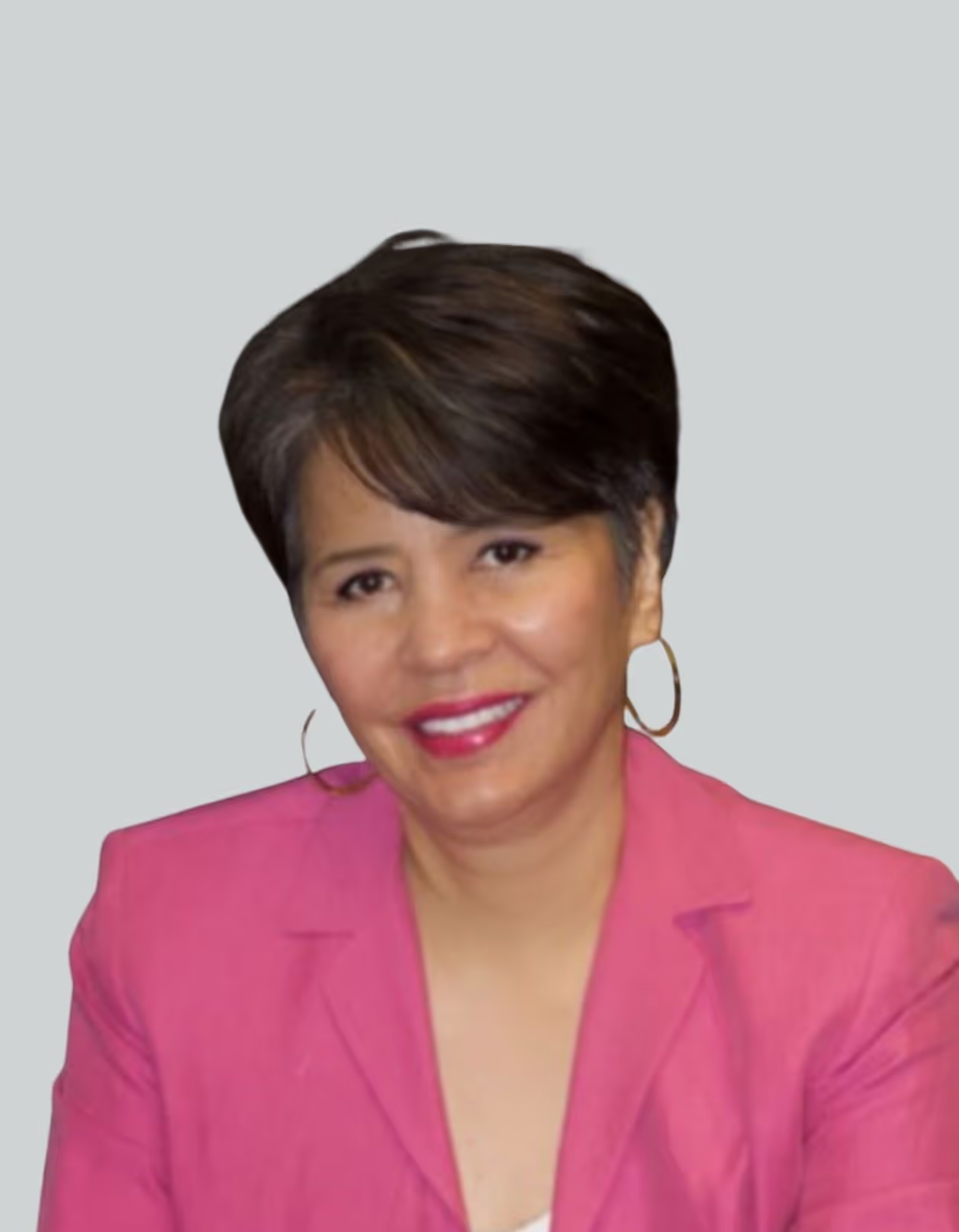
Note this is longer than our typical blog, but chock-full of helpful tips!
In 2014 Diversity, Equity, and Inclusion (DEI) initiatives were prioritized at a statewide non-profit where I was the CEO. At that time, the mantra was formal DEI work is new and there’s not a clear path to follow so everyone WILL make mistakes and that’s ok.
Nearly 10 years later these initiatives continue to be an increasing priority at many nonprofit organizations, and yet the path often remains unclear. For those who are thinking through how to operationalize DEI, I offer my reflections.
The Board Must be On Board with DEI
From the beginning it’s important that board members are aligned with and participate in the DEI work. They should have a DEI committee or at least a DEI liaison between the board and staff who can keep the DEI goals top of mind for all board members. Board commitment ensures that DEI principles will more likely integrate into all facets of the organization.
Hiring a DEI Consultant
For those agencies who are ready to commit and have available funds, one of the first steps is to identify a skilled consultant with lived DEI experience. A consultant should be able to provide a national picture of historical and present inequities, share, and expand on DEI concepts, develop a common DEI language among the staff and board, understand how to navigate discussions with different levels of organizational power present, and with the staff and board develop DEI goals based on the organization’s values.
A component that is sometimes overlooked when seeking a consultant is the assessment of emotional intelligence. They and any co-facilitators must be able to demonstrate patience, wisdom, and an even temperament to ensure a positive team experience. The absence of these qualities can totally derail DEI efforts. Early on, while assessing organizational needs, the consultant will likely include sessions in which staff speak their truths about the current state of the organization—their insight will be key to shaping the DEI approach. A well-suited consultant will help staff have the courage to speak and the courage to listen.
If I Knew Then What I Know Now
1. Organizational DEI work can lead to difficult discussions as people are encouraged to be vulnerable and honest. It’s not unusual for disagreements to occur amongst the staff. An ideal consultant will be able navigate these conversations and know how to acknowledge and manage the feelings and reactions of individuals while maintaining calm control of the group.
2. Take the time to reach out to your network to ask for recommendations from trusted colleagues with firsthand knowledge of potential consultants.
3. As a part of the vetting process, the ED/CEO should personally conduct intentional conversations with each prospective consultant to assess their emotional intelligence as well as their skills.
PRO TIP
1. Be proactively sensitive to the fact that some sessions will include staff at different levels of organizational power and ask the consultant how they manage these types of forums. Keep in mind that this environment could be awkward or confrontational for a staff member at any level and be upfront with concerns so the consultant can plan a productive session.
What Comes After the Initial Work with a Consultant?
When the consultant completes their initial work with the organization, it’s not uncommon for the DEI efforts to stall as there is often a gap when replacing a consultant leader with staff leaders.
If one is not already in place this will be the time to form a DEI Planning Task Force comprised of staff members at various leadership levels with the charge of developing a DEI strategic plan that outlines tasks and a timeline relative to the DEI goals that were identified in the earlier phase. Staff participation is key as it leads to team ownership. However, it’s prudent to expect the consultant will be needed periodically as the staff continues to build on the initial framework. It’s likely that circumstances will arise in which future messaging and information will be most effective when delivered by leadership together with an outside DEI expert.
Another critical element of the DEI strategic plan is to determine the expected outcomes combined with a form of measurement. Agreed upon measures should be communicated to all staff early and regularly to celebrate wins and to address questions about whether progress is really occurring.
The DEI Planning Task Force is temporary and disbands once the plan is complete, therefore an organization should also consider implementing a permanent DEI Team that consists of leadership and staff. Its primary purposes are to oversee the implementation and execution of the plan, develop approaches to continue to embed DEI principles within the organization, and serve as a reliable liaison and communication channel to ensure the staff is kept informed and has a continual voice in ongoing DEI matters.
If I Knew Then What I Know Now
1. With deep analytical measures, be sure to incorporate several straightforward ones such as periodically gauging the representation of the leadership team, those involved in planning and decision-making, and partners.
2. Pre-determined measures and outcomes should be reviewed regularly with the DEI Team to assess progress and to develop consistent messaging for the rest of the staff. When reviewing measures, the general focus should be what is going well while also keeping in perspective what is lagging. In general, there should be a consistent message from the leadership and the DEI Team to assure the staff that the work is moving in a productive direction.
PRO TIPS
1. Leadership should recognize and reward the time and commitment of staff participating on any DEI working team.
2. Develop a charter for the permanent DEI Team and have leadership regularly review it with the team to ensure they’re operating as intended. Of utmost importance is that the relationship between leadership and the DEI Team be transparent, clear, and based on trust. If leadership senses a breakdown, the group should immediately address this together.
The Board and Staff DEI Plan
As the staff develops their plan, the board should also develop its own aligned plan and set of respective activities. Once these plans are complete, board and staff members can choose to be involved with the implementation activities most meaningful to them.
With either plan, it is important to realize that some goals may be low-hanging fruit reached in a short timeframe and others may extend out to 3-5-10 years or more. It should be the decision of the board and staff to determine realistic timelines for their respective plans and document the responsible parties based on several factors including the time people have available to implement the DEI plan. Board and staff meetings should include a regularly scheduled review of the timeline, determine any adjustments or changes to the current approach, and generally discuss the state of the DEI efforts.
If I Knew Then What I Know Now
1. The board should have their own set of criteria to assess DEI impacts when making decisions.
2. The ED/CEO should take the time to have a conversation with board members to understand how DEI was considered in key decisions.
3. The ED/CEO should ask the board if they’re willing to hear insights from them regarding DEI impact of decisions to help ensure a well-thought-out outcome.
PRO TIP
1. Keep the staff informed at a high level of the board’s DEI work. It is important that staff see DEI as organization-wide, including the board.
Caucuses
In racial equity work, caucusing is a tool in which people meet and work within their same racial group to discuss institutional racism to advance organizational equity. Caucuses also serve to provide personal and professional growth resulting in powerful transformations. Staff may also choose to caucus by other identities including sexual orientation or gender identity.
I’ve observed white caucus groups discuss the awareness of their own privileges and how these factors into many aspects of their lives and hold each other accountable by developing anti-racist practices. I have also seen brown caucuses discuss their experiences with being ‘white passing’ while also experiencing biases, and how this affects their own thinking and actions. And black caucuses provide support to its members when identifying institutional racism and discussing their own experiences. The staff should determine the racial groups and join the onewith which they identify.
As DEI work continues over time, often there is a feeling of accomplishment amongst the staff that DEI principles are being prioritized in a truly meaningful way. There may also be situations in which team conflicts arise as the expectations of team members begin to differ and suddenly the leadership may find that the team is not as aligned as they once were. Many factors influence this and sometimes the leadership will feel compelled to address these issues--this is a critical time to consider if the leadership and DEI consultant together should share in the messaging and issue resolution. Staff may perceive messages using the internal-external approach as more credible so the team can re-set more efficiently.
If I Knew Then What I Know Now
1. Engage the DEI consultant early when wrinkles begin to appear within the team. This is a time in which the consultant must have the skills to navigate potentially contentious environments.
PRO TIP
1. Initial discussions within caucuses can sometimes be slow to begin and can be kick-started by having the group read material first, followed by a discussion. I’ve used Me and White Supremacy by Layla F. Saad, which has accompanying guide to reflect upon in Me and White supremacy, a guided journal.
2. Consider whether your organization should have a DEI goal in employee performance plans and review. Doing so adds another layer of organizational accountability and prioritization. The goals and measures are dependent on the DEI stage of the organization. Examples include participation in a DEI training, participation in a caucus, or being active on a DEI team.
Tying It All Together
Soon after the staff and board DEI strategic plans are complete, its discussion should be included in the next organizational strategic planning session for its incorporation in the overall plan. Intentionally including the DEI activities and goals will help to ensure that these practices will begin to be threaded through HR decisions including staffing and staff development; program planning, design, and management; budgeting and financial decisions; fundraising and grantmaking; developing partnerships; organizational policies, and procedures; general operations; policy and advocacy efforts; and all board activities.

Finding a job that speaks to your passion can be stressful. Some people are anxious when they realize that their passions are difficult to identify, seem ambiguous or elusive, or feel non-transferable to actual jobs.


The Funding Landscape Is Shifting. Is Your Revenue Model?

Does Your Organization Need To Enter Concussion Protocol?

It Doesn’t Have to Fail to End

Strong Relationships Don't Happen by Accident
Staying Connected
Complete the form below to receive the latest updates, events, and insights.
Ready to Partner