How do we define community? And how does community define us?
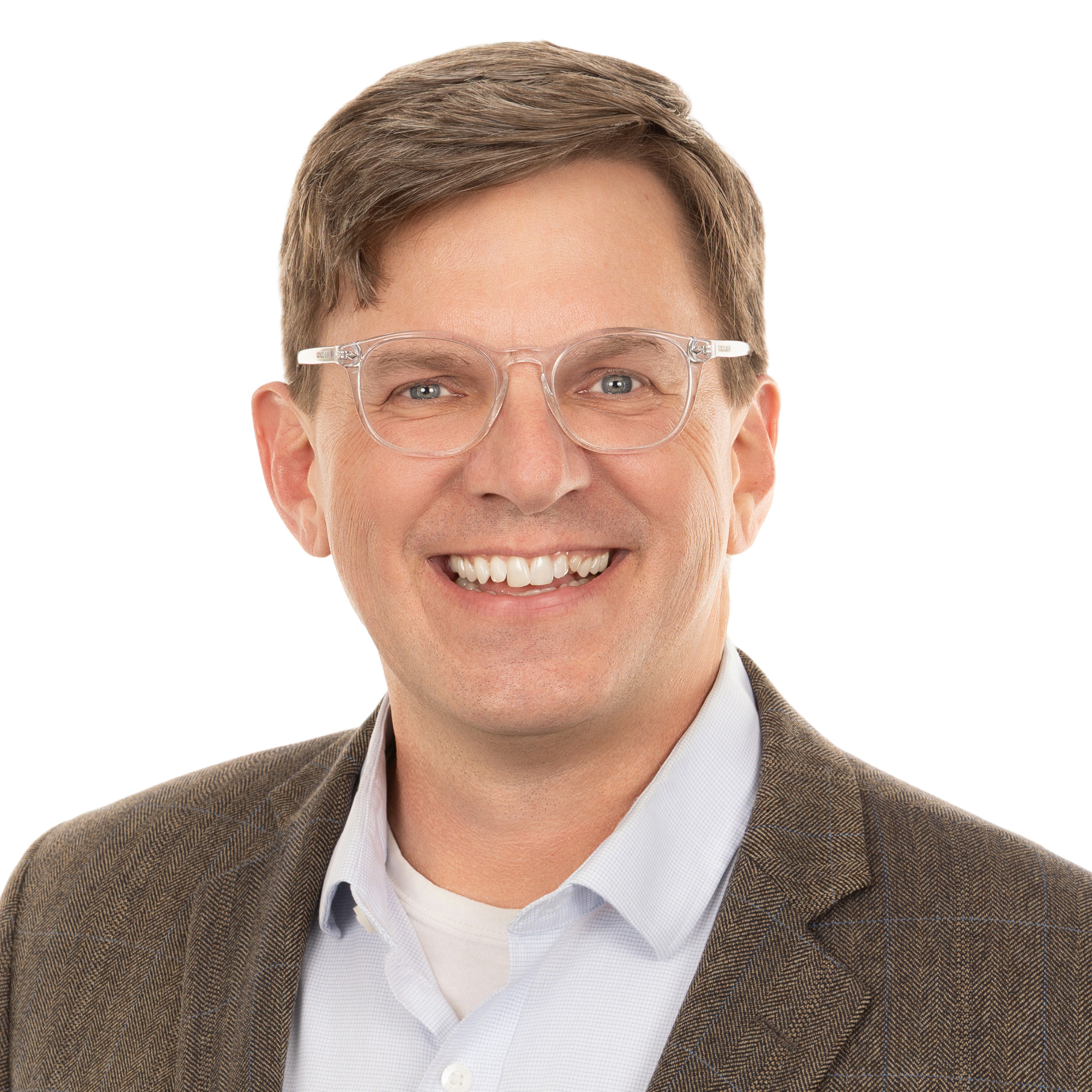
We all carry with us throughout our lives a short list of profound thinkers who have influenced and shaped our own personal growth and professional development. Last week, one of the most influential in my own life, both as an individual and a nonprofit practitioner, left this world.
Alasdair MacIntyre, who died May 21, was a Scottish political philosopher and virtue ethicist who spent most his academic career teaching at the University of Notre Dame. His landmark book, After Virtue: A Study in Moral Theory, shook me like an intellectual thunderclap from the first page to the last.
It would be malpractice to try and quickly summarize here the intellectual breadth and depth of MacIntyre’s life’s work and evolution as a philosopher. His most profound work came much later in his academic career and his arguments are not without criticism and shortcomings (but, then again, whose isn’t?). All that is for another and much longer blog post.
The thing I have carried most closely with me after closing the last page of After Virtue is the insight into the role of our collective narratives and communal traditions in defining who we are and guiding how we should act.
I often share about storytelling and its role in community building and development in my work, and when I do, my presentation is anchored by a quote from After Virtue.
“I can only answer the question ‘What am I to do?’ if I can answer the prior question ‘Of what story or stories do I find myself a part?"
The most profound effect MacIntyre’s thought had on my own life was to reimagine the role of community and traditions in the formation of one’s identity and ethical framework. For better or worse, our communities and traditions define who we are and, in many ways, consciously or subconsciously, determine how we act.
Without minimizing the many profound advances of the Enlightenment—science, medicine, governance, art, human rights—it perhaps gave us a little too much confidence in our own individual abilities and perhaps an over reliance on the human faculty of reason as a pure fountain of truth. We often fancy ourselves as autonomous moral agents, equipped with the mental capacity and rational clarity to determine right from wrong on our own.
After Virtue was an unsettling read for me because it forced me to reconsider my own level of ethical certainty and the context of my moral grounding. Through my reading of MacIntrye, as well as later exposure to the field of narrative ethics and those thinkers who built upon the starting point of After Virtue, I became convinced that as individuals we learn what to do not from an internal moral calculus or predetermined set of rules but rather through the lived and modeled actions of others who we see navigating the world and its often murky and nuanced ethical dilemmas.
Much like language is not revealed to us a priori prior to experience or physically present in the external world. Right and wrong is a matter of communication, of example, and of alignment and agreement amongst individuals. The thing with four legs and a flat surface my laptop sets on as I type this sentence is not inherently a “table.” That is merely a phonetic expression that at some point individuals agreed upon to be the signifier of a physical object that exists outside of our own minds.
Do our moral beliefs and ethical actions also track along a similar historical and communal agreement process? How can I know for certain what is right or wrong, good or bad, through the deployment of my own reason? For me, I personally need a community to help me navigate the ethical mapping of the external world. If not, I run the risk of depending upon my own flawed and biased logical facilities and errant stereotypes to make those determinations.
So, what does any of this have to do with nonprofits? It’s a fair question. While MacIntrye’s political and moral thought might not correlate one-to-one as a day-to-day guide for nonprofit practitioners, I do believe it offers a comparable paradigm for decision making. If community, tradition, and shared narrative is foundational to our own individual identity, ethical decision making, and understanding of the physical world around us, how do nonprofits engage the community around them to best understand what they should or should not do? How would your nonprofit answer that prior question of, “what story or stories do we find ourselves a part of?”
To understand the narrative of your own community, you must first begin with an understanding of how others define and understand the narrative of the community you share. Much like we work through the mapping of the external world through language, nonprofits and the communities they serve must work together to sketch a more robust and three-dimensional portrait of their shared lived and historical experiences.
If MacIntyre is correct, just as individuals must understand the stories they find themselves a part of before they can fully understand how to act, nonprofits too must take it upon themselves to understand the narrative of which they are a part of before they can answer the question of “what are we to do?”
So, what stories do you and your team find yourself a part of in your own work?
Todd Brantley is a Senior Advisor with Armstrong McGuire who specializes in board governance, rural community & economic development, faith communities, strategic planning, organizational assessment. Learn more about Todd and check out his other musings in his bio.

One of the lesser-known figures in the Western philosophical tradition is the 18th Century English Bishop George Berkeley (pronounced, “Barkley”).


Two weeks ago, we reflected on the devasting impact of Hurricane Helene in Western North Carolina. Today, we resume the conversation.
At the time of this writing, I, like countless others across the state, have been trying to make sense of the devastation left by Hurricane Helene in Western North Carolina.

This month, Armstrong McGuire is reflecting on nonprofit board governance, and what it really means to be a single member of a collective Board of Directors.

Full disclosure: The blog post you are reading almost didn’t happen. Like most people, there are times where I can come down with a nasty case of writer’s block, and I was stricken by a particularly acute onset this time.

The Funding Landscape Is Shifting. Is Your Revenue Model?

Does Your Organization Need To Enter Concussion Protocol?

It Doesn’t Have to Fail to End

Strong Relationships Don't Happen by Accident
Staying Connected
Complete the form below to receive the latest updates, events, and insights.
Ready to Partner