By the People, for the People: The Craft of Governance

This month's Guest Blogger is Craig Stephenson. Craig is Executive Vice President of Cary Oil Co., Inc. and serves as director of the Cary Oil Foundation. He has served on a number of non-profit boards.
Earlier this summer we took our kids to visit Washington DC. After walking through the museums and monuments and free speech exercisers of every description we made our way east to the Capitol building. You can tell who controls the purse strings in Washington. The National Museum of Natural History had fascinating exhibits but facilities that had not been refurbished since the Johnson administration. Maybe Eisenhower. The Capitol building on the other hand boasted a gleaming visitor’s center with friendly and welcoming staff. The visitor experience there begins with a 12-minute documentary describing the nation’s founding Constitutional Convention. The lessons of courage and compromise, of sacrifice and perseverance made me proud to be an American. It all started out so nobly.
Like the scaffolding used to refurbish the Capitol dome this summer, the governance framework resulting from that first Congress provided important structure on which to build the world’s most prosperous nation. As we think about this task of governance in the context of the organizations in which we serve, it makes me wonder. How well are we governing ourselves as non-profits? How often do we review our own metaphorical 12-minute film to reassess our history, vision, purpose, and sustainability? As non-profit leaders, particularly board leaders, how often do we undertake the critical work of examining the undercarriage of our organization to make assessments of our policies, plans and practices? How often do board leaders make time in meetings for what the experts call generative conversation about our organizations? Not enough, I would submit.
Admittedly, discussions on governance are not all that dazzling. Governance seminars don’t end with high-fives and fists bumps all around. Improving governance is like eating kale: everyone knows they should do it. The benefits of sturdy non-profit governance are rarely noticed, and the perils of shoddy governance are revealed in due time. Sometimes on the front page of the newspaper. We all know that no one wins through shortcuts and lax board oversight. And we wring our hands over the ones who lose – those once served by the organization, the organization’s staff, the community and funders. While thankfully not all governance failures result in public flameouts, far too many non-profits go hungry by well-meaning but under-prepared boards.
So what to do? Training is key. But even before training is the courage for board and staff leaders to ask questions and invite outside assessment of their organizational governance. Resources abound at the local, regional, and national level. To overcome the inertia of most boards will take, at times, artful persuasion, and at other times clinch-fisted table pounding. It will take board leaders caring deeply about the long-term viability and vitality of their organizations to begin to ask questions of themselves and their board.
Institutional grant makers have long asked organizational governance questions of grant seekers. Now philanthropic individuals and donor-advised fundholders are asking deeper questions not only about programs, methods, and outcomes, but of organizational health and other fruits of solid governance practices. And they’re tying funding to demonstrated commitment to these practices. It’s not just about who’s on the board, but how these individuals are actively learning and demonstrating the craft of governance. Non-profits that consistently include in their budgets adequate funding for board training will not only strengthen the governance undercarriage of their own organization but of other organizations their board members serve in the future. Everybody benefits.
Good governance requires the consent of the governed. Many non-profit staff leaders welcome board leaders committed to governance excellence and the steps necessary to move the organization toward it. So there is not only consent, but longing. As funders continue to seek demonstrated commitment to organizational governance of gift-seeking organizations the entire non-profit community will be strengthened.

Nonprofits are not the sector you turn to when everything else has failed. We are the sector that keeps showing up, in good times and hard ones. It is time our seat at the table reflected that.


At a time when nonprofit workforce burnout is high and experienced leaders are nearing transition, the nonprofit leadership pipeline needs attention. Add to that the unique challenge of population shifts in Eastern North Carolina...

Our defense of philanthropic freedom is about more than our members. It’s also about preserving an environment where we can respond to challenges in inspiring and meaningful ways – and support our communities when they need it the most.

For 10 years, South Carolina's first Medical Legal Partnership has shown how legal aid can improve health outcomes by addressing housing, income, benefits and other issues that often keep patients from getting better.

To be an effective manager, you need both management skills and leadership qualities. These are the capabilities that make your job easier, increase employee accountability, and create a better workplace for everyone.

Next Level: Ready or Not, Here We Grow
We Are Not the Sector You Turn to Last
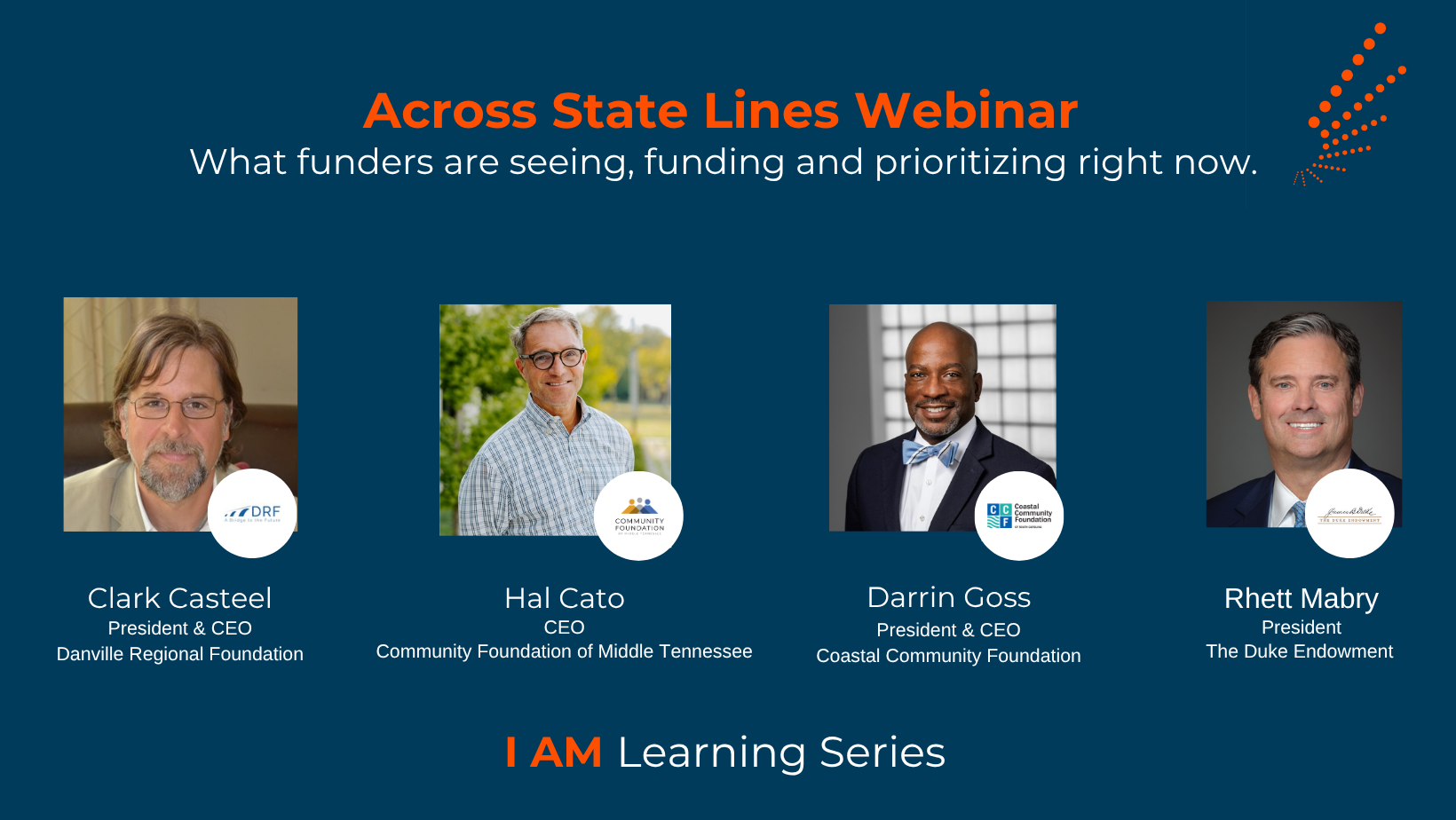
Across State Lines What Funders Are Seeing, Prioritizing and Funding Right Now
Building Ponds: Lessons from a Few Dump Trucks and Four Funders
Staying Connected
Complete the form below to receive the latest updates, events, and insights.
Ready to Partner