
It Doesn’t Have to Fail to End

I am not particularly good at endings.
I am good at starting things. I love new ideas, new connections and new possibilities. I can see what something might become and get excited about helping it get there.
Ending something is harder. We tend to have a simple story about endings. If something is working, we keep doing it. If we stop doing it, something must have gone wrong.
But I am increasingly convinced that is not true. Sometimes things end because they failed, and sometimes things end because they worked.
This fall, I will facilitate my final Positive Intelligence cohort through Armstrong McGuire.
Positive Intelligence came into my life at a time when I needed it. The framework helped me better understand the voices in my head the ones that push me, judge me, tell me to keep going and often make things harder than they need to be.
It gave me language for patterns I had experienced my entire life but had not always known how to name. More importantly, it gave me tools to respond differently. That has influenced how I lead, how I parent, how I coach, how I facilitate, how I handle stress and how I understand myself.
And then I got to share it with other people.
Over the past several years, 80 people have gone through the Positive Intelligence program with me. I have watched people recognize their own patterns, laugh at themselves, challenge themselves, support each other and try new ways of responding to the things life and leadership throw at them.
There have been vulnerable conversations. There have been breakthroughs. There have been relationships built between people who might never have met otherwise. I am incredibly proud of what these cohorts have been.
Which is exactly why deciding to end them is hard. There isn't a dramatic story about why this needs to end. I haven't stopped believing in the work, and I haven't stopped seeing its value.
And I think that distinction matters far beyond my decision about a coaching program.
We are better at starting than stopping
In the nonprofit sector, we spend a lot of time asking questions about beginnings.
What should we launch? Where should we grow? What new program does our community need? What new funding should we pursue? What partnership should we create?
Those are important questions.
But I wonder if we spend enough time asking a much harder question:
What are we willing to stop?
Organizations are living things. They change because the people and communities around them change. A program that was exactly what a community needed five years ago may not be what it needs today.
Two organizations may discover that their missions can be advanced more effectively together than separately.
An organization may reaffiliate, disaffiliate, restructure or merge.
Sometimes an organization may even determine that its work, at least in its current form, is complete.
And yet those decisions can feel like failure.
We remember how hard we worked to build the thing. We think about the people who invested in it. We tell ourselves, but it has done so much good.
All of that can be true.
Something does not have to fail for it to end.
Maybe one of the responsibilities of leadership is knowing the difference.
What if completion is something to celebrate?
There is an important distinction between quitting something because it is difficult and choosing to release something because it is no longer aligned with where you (or your organization) are going.
Those decisions can look remarkably similar from the outside, but they feel very different on the inside. Alignment requires us to pay attention to what we love, what we are good at, what the world needs and sometimes to what is changing within us.
The mission may stay the same while the way we pursue it changes.
That isn't necessarily mission drift.
It might actually be mission clarity.
I have worked alongside enough nonprofit leaders and boards during moments of transition to know that these decisions rarely happen without emotion. Organizations carry history. Programs hold memories. People have built careers, relationships and meaning around the work.
So when something ends, there can be sadness. Disappointment. Grief.
Moving forward doesn't require us to pretend the thing we are leaving behind didn't matter.
In fact, I think the opposite is true. We can honor the gifts of what we learned, who we met and what we will carry forward. And we can still decide to let it go.
One final cohort
That is how I want to approach this final Positive Intelligence cohort: as the intentional completion of something that has mattered deeply to me.
Our information session will be on September 14, and the final cohort will begin October 5.
If you have been curious about Positive Intelligence, I would love for you to join us for the information session.
If you have thought about participating before but the timing wasn't right, perhaps this is your time.
And if you recognize some of those voices I described, the ones telling you to push harder, fix more, control the outcome or judge yourself a little more harshly than you would ever judge a friend, this work might give you a different way to understand them.
I would be honored to have you be part of this final cohort.
Maybe there is something in that for all of us who lead organizations, programs, teams and communities.
We don't have to keep something forever to prove that it mattered.
Sometimes the most respectful thing we can do with something that has served us well is recognize when its work is complete.
So perhaps the question isn't only, What should we do next?
Maybe we should also ask:
What are you (or your organization) holding onto because it still matters and what might you be ready to release because it has already done what it came here to do?
The Positive Intelligence Information session is on September 14th at noon. Register here.
The Cohort will be held on Mondays from October 5 – November 23. Register here.

When people hear that I spend much of my time supporting Interim Executive Leaders, I’m often asked a simple question: “So… what exactly makes a successful interim?”


Our son is starting middle school this month.

As nonprofit professionals you are no stranger to the demands of leadership.

As I look at my screen today, there are many colorful Post-It notes reminding me of things I want to remember…

I am taking a three-month advanced Positive Intelligence coaching class and this week we are focusing on our money mindset.
.png)
Next Level: Ready or Not, Here We Grow

We Are Not the Sector You Turn to Last
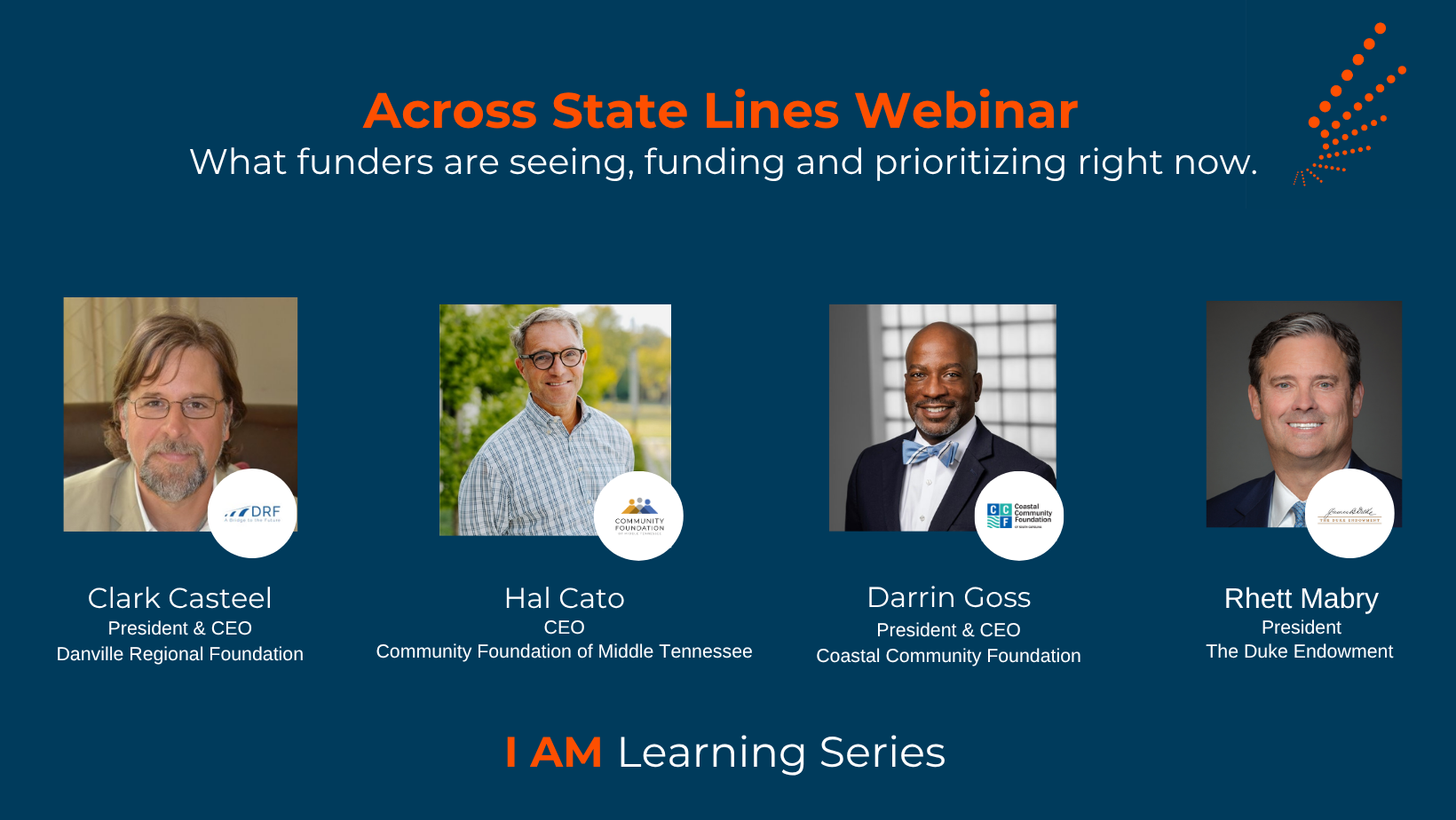
Across State Lines What Funders Are Seeing, Prioritizing and Funding Right Now
Building Ponds: Lessons from a Few Dump Trucks and Four Funders
Staying Connected
Complete the form below to receive the latest updates, events, and insights.
Ready to Partner