.png)
Next Level: Ready or Not, Here We Grow

Over the last year, my daughter and I have traveled across North Carolina, South Carolina and Tennessee visiting colleges she may attend next fall. We walked campuses filled with possibilities, sat through information sessions and talked about what the future might hold. A few weeks ago, on the drive home from Tennessee, she said something that stopped me in my tracks: "I think I'm ready for the next level."
I was not hearing in her voice that she had everything figured out. She wasn't claiming to know exactly what major she'd choose, where she'd live or what her career would become. She was simply saying she was ready to grow, leave what was familiar and embrace what was possible.
The more I thought about her words, the more I realized they describe where many of us are with artificial intelligence. AI is asking us to step into unfamiliar territory much like my daughter is preparing to do. We don't know exactly where every tool will lead, which platform is the best or what challenges will emerge. New capabilities seem to arrive weekly and the pace can be both exciting and overwhelming.
Yet being ready for the next level does not mean having all the answers.
In my opinion, it means remaining curious. It means experimenting responsibly. It means learning how to use new capabilities without surrendering the judgment, experience and values that guide our work. Over the past year, I've watched AI evolve from an interesting productivity tool into something much more significant. It can summarize meetings, analyze data, create presentations, identify patterns and help us spend less time on repetitive tasks. What once felt futuristic is quickly becoming part of daily work.
But one lesson continues to stay true: the best results come from people who think critically.
AI can generate seven versions of a concept. A leader still has to choose the right one.
AI can identify patterns. A leader still has to decide what matters.
AI can summarize the past. A leader still has to create the future.
That distinction matters. The goal isn't to replace human expertise. The goal is to amplify it. Technology can increase our capacity, but leadership still requires experience, wisdom, empathy, accountability and judgment.
What excites me most isn't that we've figured AI out. It's that we're learning together.
The organizations, leaders and teams who thrive won't necessarily be those with the most advanced technology. They'll be the ones willing to learn together, adapt and combine the power of AI with the best of what makes us human. That's the next level.
My daughter is stepping into her next chapter without knowing every turn the journey will take. In many ways, so are we. The opportunity isn't to have all the answers. It's to have the courage to keep learning.
And we're only getting started.

I contend that if we do not address the care of our teams and ourselves, we may cause future harm to a sector we are working to sustain. But where do we begin to get our “May flowers”?


Every year on November 13 the world comes together to celebrate World Kindness Day, first introduced by a coalition of NGOs in 1998.

Artificial Intelligence is continuing to change the nonprofit sector landscape, and it is doing so at a rapid pace.

I am not sure I have ever been more ready for spring and sunshine in my life.

A few weeks ago, I had the privilege of checking off another bucket list trip with my family and soaking in the beauty of Yellowstone and Grand Teton National Parks.
Next Level: Ready or Not, Here We Grow

We Are Not the Sector You Turn to Last
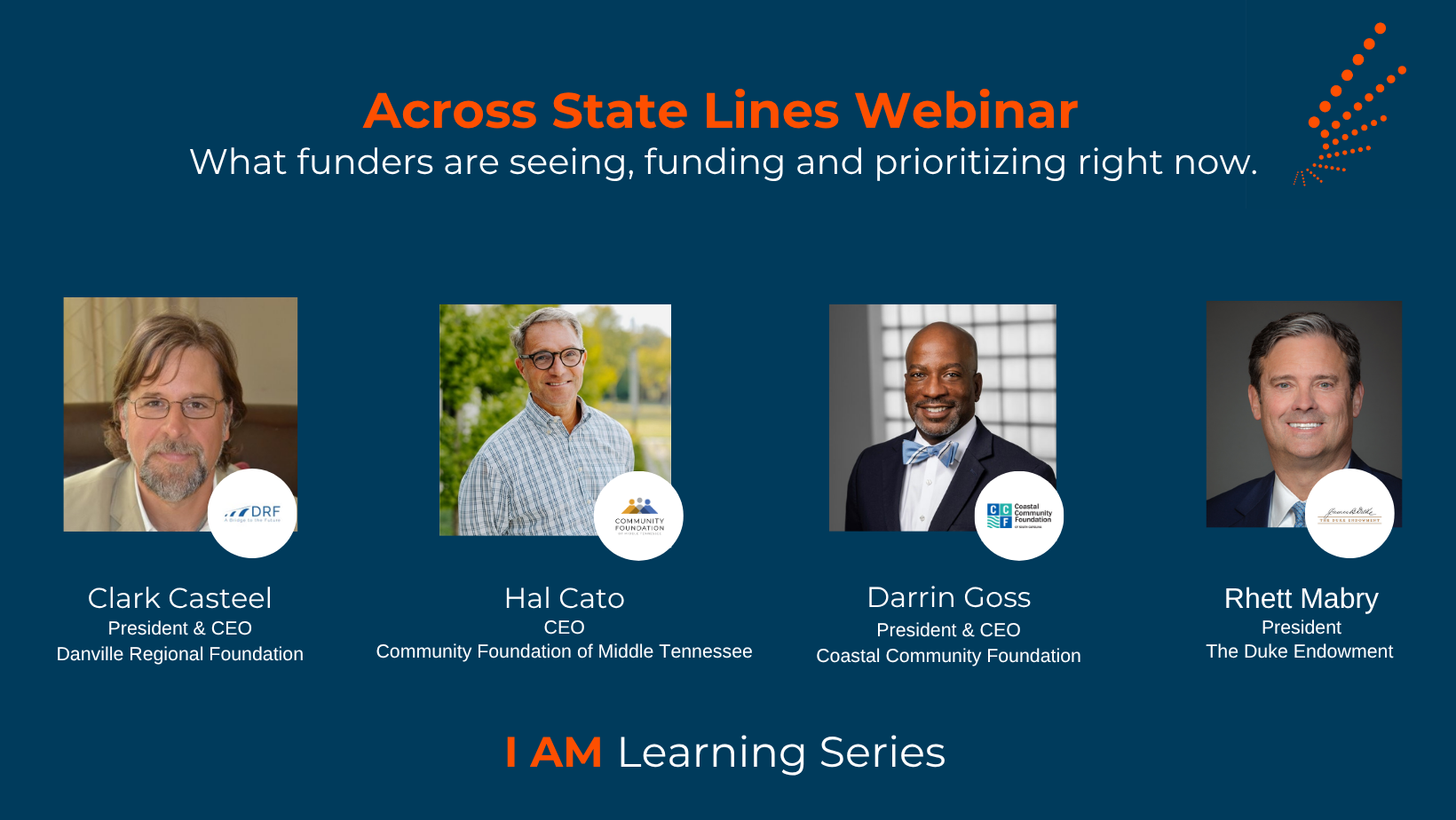
Across State Lines What Funders Are Seeing, Prioritizing and Funding Right Now

Building Ponds: Lessons from a Few Dump Trucks and Four Funders
Staying Connected
Complete the form below to receive the latest updates, events, and insights.
Ready to Partner