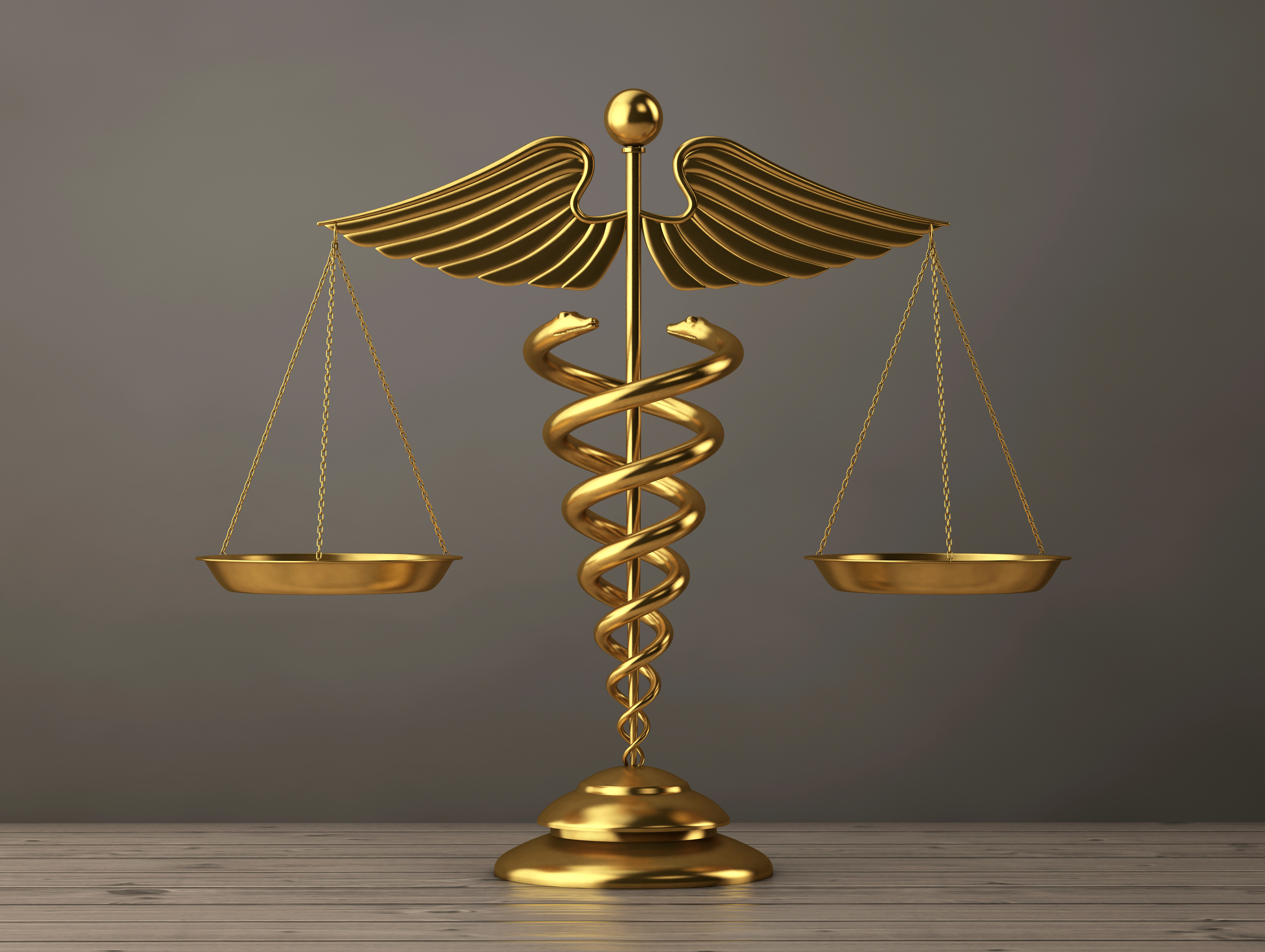
When a Doctor’s Best Prescription Is… a ‘Legal Aid’ Lawyer

by Kirby Mitchell, Medical Legal Partnership Legal Director, South Carolina Legal Services
How Legal Needs Shape Health and Why It Matters
A child arrives at the emergency room for the third time in six months struggling to breathe. The doctor prescribes an inhaler, breathing treatments, and follow-up care. But the problem may not be in the child's lungs. It’s at home, where black mold is spreading across the walls of the family's apartment.
An older adult's blood pressure remains dangerously high despite medication adjustments. The geriatrician eventually learns the patient has been forced to choose between paying for prescriptions or keeping electricity on after the utility subsidy was wrongfully terminated.
A mother repeatedly misses her baby's important medical check-ups because she is trying to respond to an unfair eviction action and keep her family housed.
In each of these situations, the serious and immediate medical crisis is very real. But so is the legal problem driving the medical crisis.
And sometimes, the best prescription isn't a prescription at all. The best thing a doctor can do for a patient’s health sometimes is… connect the patient to ‘legal aid.’
Health Begins Outside the Doctor’s Exam Room
Healthcare and legal services largely operate in separate worlds. Doctors treat illness. Lawyers address legal problems. And separately from those professions, social service providers help families navigate complex government and non-profit systems.
But families experiencing poverty never experienced these problems as separate.
A housing condition can trigger asthma.
A loss of income can mean choosing between food and medication.
An unlawful eviction can destabilize an entire family.
A denial of public benefits can leave someone without the resources necessary to remain safely housed.
A lack of educational support can greatly affect a child's development and long-term health.
These are not simply social problems that happen to exist alongside health problems. They can be health-harming legal needs that directly affect a person's health and ability to follow a medical treatment plan.
This understanding is at the heart of Medical Legal Partnerships, or MLPs.
Ten years ago, South Carolina Legal Services (SCLS), Prisma Health, and Furman University’s Institute for the Advancement of Community Health (IACH) challenged the traditional separation between healthcare and legal services by launching South Carolina's first Medical Legal Partnership (MLP). What began as an innovative collaboration has grown into an exciting approach for addressing the circumstances that often determine whether a patient can actually become and remain healthy.
Think Beyond the Diagnosis: The I-HELP Framework
A helpful tool to understand our Upstate MLP’s work is through consideration of the I-HELP framework: Income, Housing, Education, Legal Status and Personal Stability.
These five key focus areas largely shape a person’s health much more than what happens during a doctor visit.
Income.
Can the patient afford food, medication, transportation, and the basic necessities that support health? Has an income benefit been wrongfully terminated? Is a family facing the loss of wages or income that makes stable housing impossible?
Housing.
Is the housing habitable, and if not, what circumstances are making the conditions worse? Is the patient's home environment undermining the treatment plan? Can the patient safely return home after leaving the hospital?
Education.
Does a child have access to the educational supports necessary to thrive? Does a family understand its rights and responsibilities within complicated educational systems? Education is both a pathway to opportunity and an important driver of long-term health.
Legal Status.
Does the patient have the legal protections, benefits, coverage, or documentation necessary to access essential services and remain safe and stable?
Personal Stability.
Is the patient facing eviction, utility shutoff, family violence, unsafe housing, or another immediate physical crisis that makes it difficult to focus on health?
The I-HELP framework helps healthcare professionals “reframe” the patient’s problem, and ask a different question.
Not simply, “What is medically wrong with this patient?”
But also, “What is happening in this patient's life that is preventing them from getting any better?”
That is where ‘legal aid’ can become a critical part of the healthcare solution.
What Happens When the Lawyer Joins the Care Team?
In an MLP, healthcare professionals are trained to recognize legal barriers that may be affecting a patient's health. When those needs are identified, patients are connected directly with legal professionals who work alongside the healthcare team to address the underlying problem. Not just the symptoms of the problem – the cause of the problem.
The intervention may look very different from what most people imagine when they hear the word “lawyer.”
Sometimes it is helping a family address an unsafe housing condition.
Sometimes it is preventing an unlawful eviction.
Sometimes it is helping restore public benefits or healthcare coverage.
Sometimes it is protecting an older adult's ability to remain safely housed after a medical crisis.
Sometimes it is securing educational supports for a child with a developmental disability.
And sometimes the most important legal intervention is what MLPs call “getting upstream”: anticipating and preventing a health crisis before it becomes an emergency room visit.
One physician involved in the Upstate MLP described our role as helping providers “rethink preventive health.” Prevention is not limited to vaccinations, screenings, and medications. It can also mean keeping the lights on for a medically fragile patient, stopping an eviction or securing the benefits that allow a family to afford food and stable housing.
A Decade of Putting the MLP Approach Into Practice
Over the past decade, the Upstate MLP has served thousands of South Carolinians, including children and older adults. Physicians have made thousands of referrals, connecting vulnerable patients with legal assistance addressing housing stability, income, healthcare coverage, family safety and other issues affecting their health.
The partnership is also distinctive nationally. The Upstate MLP was South Carolina's first Medical Legal Partnership and remains unique as the only MLP in the country partnered with a liberal arts undergraduate institution rather than – as most of the 400 or so MLPs in the united States are – partnered with a medical school or law school.
But the numbers tell only part of the story.
The real impact is found in the child who can breathe more safely because the source of the problem was addressed.
The older adult who can remain safely housed after a medical crisis.
The family that can keep its healthcare coverage.
The child who receives the educational supports necessary to thrive.
The patient whose legal problem is resolved before it becomes another trip to the emergency room.
Those are healthcare outcomes, too.
Changing How We Prepare the Next Generation
Our MLP has also demonstrated that solving complex community problems requires professionals to learn from one another.
Through our MLP’s collaboration with Furman University, students preparing for careers in medicine, law, public health, and advocacy have had opportunities to see firsthand how poverty, health, and justice intersect, particularly for low-income citizens. Students learn that the problems facing patients rarely fit neatly into professional categories.
That lesson extends beyond the classroom.
Want better health outcomes? Let’s be willing to look beyond the exam room.
Want stronger communities? Let’s address the conditions that make people sick.
Want systems that truly serve the people who need them? Let’s bring the right professionals together in partnerships focused on the realities of people's lives.
What Comes Next
Ten years of the Upstate Medical Legal Partnership have confirmed something that families living in poverty have understood for generations: health and justice are deeply connected.
Focused legal advocacy can reduce the stress and instability that undermine health. Healthcare providers can identify legal problems that might otherwise remain invisible. Lawyers can help remove barriers that medicine alone cannot solve. And together, these professionals can address problems earlier, before they become more serious and more costly and more damaging to health.
The future of healthcare will require us to think differently about prevention, treatment, and the conditions that shape both.
No doubt: Sometimes the best prescription is, in fact, a medication.
Sometimes it is a breathing treatment.
And sometimes it really is a lawyer sitting alongside the care team, asking a simple but powerful question: What is happening outside this exam room that is keeping this patient from getting better?
Ten years ago, the Upstate Medical Legal Partnership began answering that question differently.
A decade later, the lesson is clear: when we address legal needs, we can help address health needs. And when healthcare and legal professionals work together, we create a more complete pathway to stability, safety, and health.
This is the promise of the Medical Legal Partnership approach. It is a promise well worth carrying forward.

Succession Planning is the Beginning, not the End. Who Will Lead Next?

When a Doctor’s Best Prescription Is… a ‘Legal Aid’ Lawyer
.png)
Are you ready for it?

The Story the Headlines Miss
Staying Connected
Complete the form below to receive the latest updates, events, and insights.
Ready to Partner