Building Ponds: Lessons from a Few Dump Trucks and Four Funders
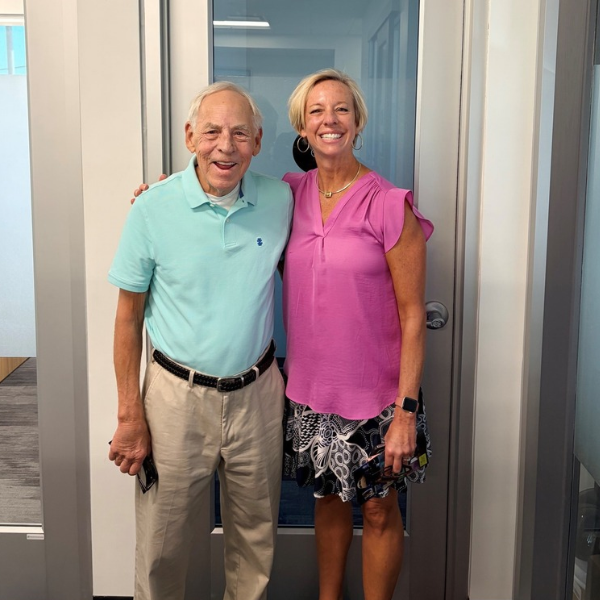
Last week, I found myself doing something I do not often have time to do. I was sitting with my dad at the Charlotte Douglas Airport Overlook, eating lunch and watching planes take off and land.
Around us, dump trucks moved back and forth in what seemed like an endless cycle, hauling dirt from one place to another. The scale of the work was impressive. I will admit, I was not entirely sure what they were building. A new runway? A new terminal? Something else entirely? What was abundantly clear was that whatever was taking shape out there had been years in the making.
Long before the first truck starts moving earth, there are studies, financial forecasts, plans, permits, engineering reviews, bids, and countless conversations that most of us will never see. The visible work happens only because of years of largely invisible work.
As I watched those trucks move dirt across the landscape, I found myself reflecting on Armstrong McGuire’s Across State Lines webinar the day before. Moderated by my colleague Dr. Patton McDowell, the conversation brought together four philanthropic leaders from across the Southeast: Clark Casteel of the Danville Regional Foundation, Hal Cato of The Community Foundation of Middle Tennessee, Darrin Goss of Coastal Community Foundation and Rhett Mabry of The Duke Endowment.
While the conversation focused on what funders are seeing, prioritizing and funding, I kept hearing something bigger. Meaningful community change rarely begins with what we can see. It begins with relationships, listening, alignment and a willingness to invest long before the results become visible.
Clark Casteel captured that idea in one of the most memorable lines of the webinar: “We’re not giving people a fish. We’re not teaching people to fish. We’re helping this region plan for and build ponds.” I wrote that one down because it described so clearly the difference between meeting an immediate need and creating the conditions for long-term change. And after decades of decline, the Danville VA region was starved for change, and the work of building ponds is paying off.
Darrin Goss added that the social, intellectual and reputational capital that foundations bring to communities can be even more impactful than the dollars. Yes, grant dollars matter, but so do trust, relationships, convening power, knowledge and the ability to bring people together around a shared challenge.
Darrin’s comments reminded me of a conversation I facilitated nearly ten years ago between nonprofit executives and funders. During the discussion, one executive director looked at a foundation leader and said, “I am grateful for the grant, but what I really appreciate is your investment in teaching me how to lead my nonprofit.” The grant addressed an immediate need. The relationship strengthened his leadership. Years later, the amount of the grant may be forgotten, but the investment in his leadership continues to pay dividends. Sometimes the most important investment a funder makes is not in a program. It is in a person.
Later in the conversation, Hal Cato’s simple advice to nonprofit leaders immediately reminded me of Tom McGuire, Armstrong McGuire’s late co-founding partner. Hal said: “Help us understand the problem.” Not the polished version of the problem. The actual problem.
Tom would have cheered at that moment.
Before launching our firm, Tom spent part of his career as a foundation leader. He often said he wished nonprofits understood that funders and nonprofits are on the same team. If you have spent any time in the social sector, you know that is not always how the relationship feels. Too often, nonprofits approach funders with a performative agenda rather than an authentic partnership. We polish our stories, soften the bad news, and present certainty when what we really have is complexity. Meanwhile, funders are trying to understand what is actually happening in a community so they can make thoughtful decisions about how to deploy their resources. Hal very simply reminded us what Tom taught me—we are all on the same team.
And Rhett tagged onto that reinforcing the importance of perspective. Foundations, even large ones, hold only a portion of the resources needed to address the challenges facing our communities. Individual donors, businesses, government, nonprofits and foundations all have roles to play. No one has enough money, knowledge, relationships or influence to do the work alone. Progress depends less on who gets credit and more on whether the right people are aligned around a shared vision. Like a major airport project, community change requires different partners to contribute different assets over time.
Most travelers will never think about the years of planning required before an airport expansion begins. They will simply see the planes take off. The same is true in our communities. We celebrate the ribbon cutting, the new housing development, improved educational outcomes, economic growth, transformational gifts and successful campaigns. What we do not always see are the years of relationship-building, listening, convening, planning, mentoring and trust that made those outcomes possible.
Perhaps that is why Clark’s pond-building analogy stayed with me as I watched those dump trucks move dirt. Ponds do not transform into a thriving ecosystem overnight. Neither do communities. Both require patience, partnership, and a willingness to invest before the results are visible. What looked like construction from the observation park was really preparation, and that may be one of the most important lessons philanthropy can offer right now. The visible results come later. The real work starts now.
If you missed our Across State Lines webinar last week, tune into the Your Path to Nonprofit Leadership podcast later this month that will feature the conversation.

Every day we walk alongside others, nonprofit leaders navigating big decisions, boards wrestling with complexity, organizations on the cusp of change. The work is deeply human, and it requires the very best of us.


I watched at least a few minutes of the Winter Olympics every day of the Games. I was continually struck by the resilience of the athletes—some who were competing as teams, but many who were competing as individuals.

At Armstrong McGuire, we celebrate the successes of our clients and the innovative strategies of our team.

There is a saying that there is no i in team.

I love games. Few things bring me more joy than game night with family or friends.
Building Ponds: Lessons from a Few Dump Trucks and Four Funders

Succession Planning is the Beginning, not the End. Who Will Lead Next?

Responding to Adversity with Resilience and Creativity

When a Doctor’s Best Prescription Is… a ‘Legal Aid’ Lawyer
Staying Connected
Complete the form below to receive the latest updates, events, and insights.
Ready to Partner