
Some of the Best Advice Came from the People I Was Supposed to Be Advising

A few days ago, I was thinking about how my nonprofit counsel has been impacted by many people throughout the course of my career.
I have worked as an attorney, in financial services as the head of a retail division and in wealth management and trust administration for high-net-worth clients, and alongside nonprofit leaders and boards. While much of my work has involved advising others, I have learned a great deal from the people I was supposed to be advising. Colleagues, friends, and family have contributed their share, too.
A few of those lessons came to mind.
Listen before you solve
During my time at National City Bank (now PNC), we could become very focused on helping clients save on estate taxes. We knew the strategies and wanted to put them to work. Sometimes, though, we were developing a solution before finding out what was important to the client.
Saving estate taxes might have been our priority. The client, on the other hand, was often more concerned about their legacy: how they would be remembered, how an inheritance would affect their children or what they could accomplish by supporting a charitable organization.
The lesson was fairly simple: knowing what to recommend starts with understanding what matters to the person asking for your advice.
This applies to nonprofit work as well. Before helping a board or executive director solve a problem, I need to spend enough time listening to understand what they are trying to accomplish and what is getting in their way.
Get to know the person behind the numbers
I once received a concerned call from a client who was a multi-millionaire. She wanted to know whether she could afford to give $3,000 to a nonprofit.
Looking at her assets and net worth, the answer seemed obvious. But understanding her question required knowing more about her than her net worth. A person’s history and experiences with money can influence decisions long after their financial circumstances have changed.
I think about that when working with nonprofits on donor relationships. Knowing someone’s capacity to give is useful. Knowing what concerns them, what motivates them, and what makes them comfortable giving is just as useful. That takes conversation and time.
Giving is personal
My experience in wealth management taught me that people often look at charitable contributions completely differently from investments.
Nonprofits should be able to explain how they use their resources and what their work accomplishes. But the return-on-investment approach that might appeal to an investor does not necessarily compel a donor to give. A personal connection, a meaningful experience, or confidence in the organization’s leadership may have more influence.
Donors also appreciate recognition. They notice whether we acknowledge their gifts, and some compare how we recognize their support with how we recognize others. We need to pay attention to what makes each donor feel appreciated.
At National City Bank, we used client segmentation. We grouped clients according to their wealth, and the wealthiest clients received the “best” customer service, including more attention and access.
I understand the need to allocate limited time and resources. But I also think there is a lesson here for nonprofits. We do not always know which donor might become a major donor. If we give someone little attention because their current gift is small, we may never learn much about their interests or potential. How we treat people helps determine whether the relationship grows.
Don’t make lasting decisions in a temporary mood
A client named Wally would call me every six months or so wanting to change his estate plan because he was mad at his children.
Whatever had happened, he was ready to respond by changing who would receive what when he died. Those calls taught me something about the importance of slowing down before making a consequential decision.
His frustration might have been understandable. But an estate plan deserved consideration beyond how he felt about his children on that particular day.
I have thought about Wally when a board is upset with an executive director or a leader is frustrated with an employee. There may be a real issue that needs attention. Still, it helps to take a little time, understand the facts and consider whether the response will make sense after the anger has passed.
Sometimes the most useful thing an advisor can do is help someone pause.
Make room for what you haven’t considered
A dear friend named Darren is a founder and funder of a number of nonprofits. He passionately gave me this sage advice one day; “they don’t know what they don’t know.”
It is an observation I have found useful in my work. A board member or executive director may be making the best decision they can with the information and experience they have. They may not realize there is another option, a question they should ask or a consequence they need to consider. Marching forward confidently, oblivious to one’s blind spots is a recipe for disaster.
That puts some responsibility on those of us providing counsel. We cannot assume people know something simply because it is familiar to us. We need to explain why it matters and give them room to ask questions.
It also applies to me. Experience is helpful, but it does not mean I have seen every situation or understand every organization. Darren’s point reminds me to stay curious and be willing to learn before offering an answer.
Be fully you
Finally, my wife Wendi has offered advice that I have used in both my personal and professional life: “You don’t stop being who you are because of who they are.” It is easy to let someone else’s behavior influence how we respond. If they are dismissive, difficult or unkind, we may feel justified in responding the same way. Wendi’s advice reminds me that I still get to choose my response. I can be firm, disagree or set a boundary and still conduct myself in a way I feel good about afterward.
In Summation
Listen before you solve….Get to know the person behind the numbers……Giving is personal…….Don’t make lasting decisions in a temporary mood…….Make room for what you haven’t considered and don’t stop being who you are because of who they are. These insights can all be applied to creating a meaningful and healthy relationship for both the client and consultant. It all starts with being humble enough to learn from individuals you advise.

When a leadership transition occurs, boards naturally focus on who comes next. That is understandable. The position is vacant. Stakeholders are asking questions. Staff members are looking for reassurance. Donors want confidence...


Although it was many years ago, I remember this like it was just yesterday and this song by the band The Who encapsules the thought of identity.

I love this time of year. The sun feels warmer, the flowers are blooming, and the days are getting longer.

We all have blind spots—things we just don’t see.

I am not sure where you might be reading this but, in the Carolinas, these cicadas seem to be everywhere.
Some of the Best Advice Came from the People I Was Supposed to Be Advising

Next Level: Ready or Not, Here We Grow

We Are Not the Sector You Turn to Last
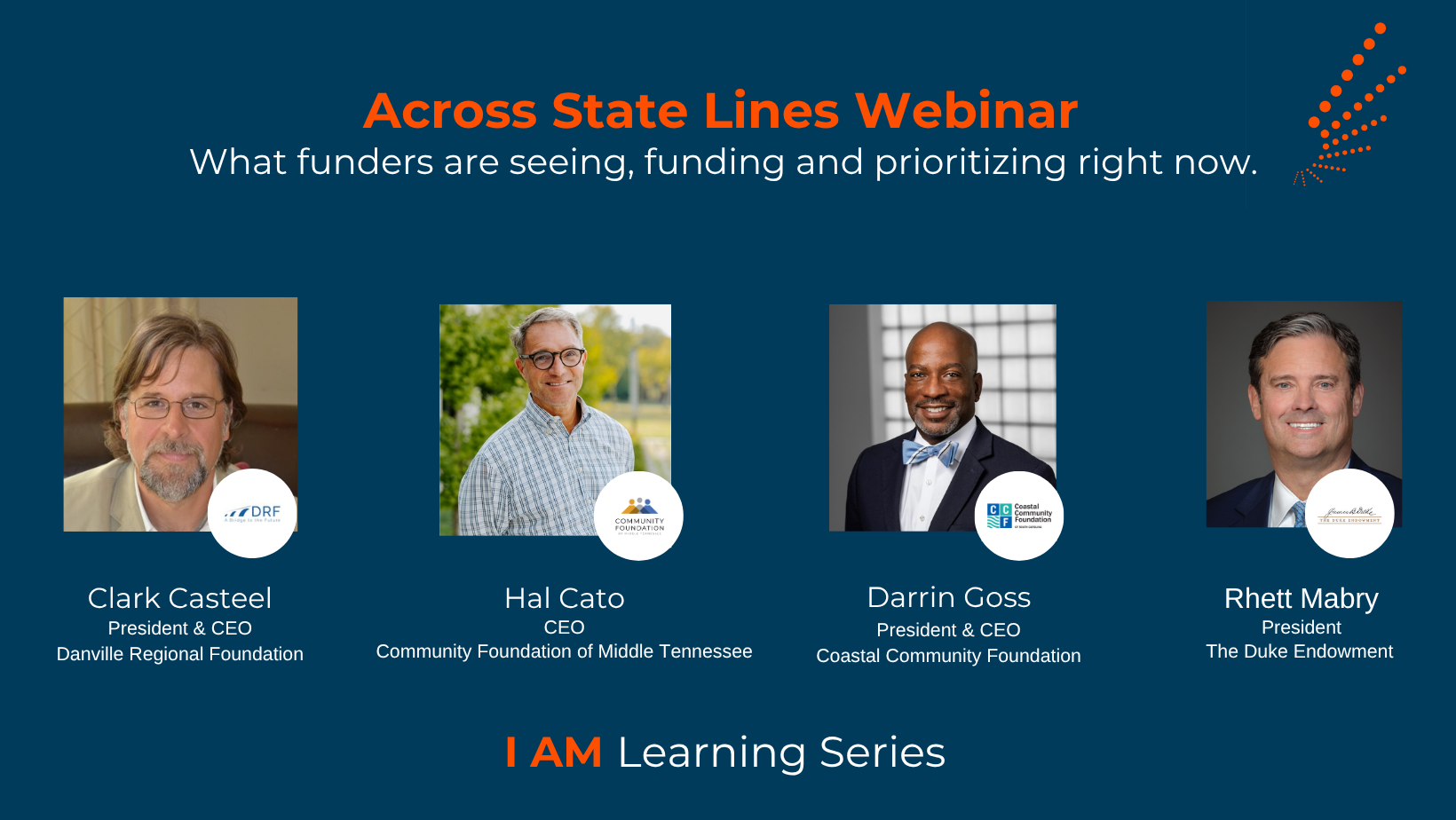
Across State Lines What Funders Are Seeing, Prioritizing and Funding Right Now
Staying Connected
Complete the form below to receive the latest updates, events, and insights.
Ready to Partner