


© 2022 Armstrong McGuire & Associates. All rights reserved.
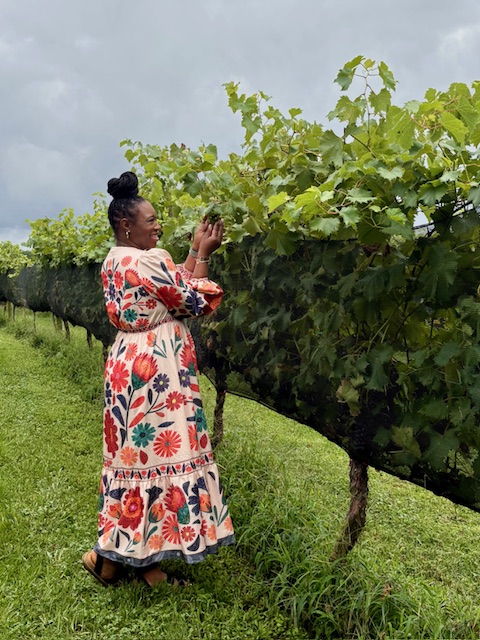
We’re honored to welcome Latoya-Palmer Addy, SHRM-CP, CEO of Parent to Parent of Georgia, to the Armstrong McGuire blog — bringing her strategic HR leadership and deep commitment to strengthening nonprofit capacity and community impact.

Nonprofit leadership is often defined by movement—strategic plans advancing, programs expanding and expectations continuing to rise. Yet over time, many leaders discover that what truly sustains a mission is not constant motion but the ability to lead with clarity, discipline and intention.
Leadership in mission-driven organizations is about stewardship—holding responsibility for something that extends beyond authority and immediate outcomes.
At a certain point in leadership, whether taking on greater responsibilities or drawing on years of experience, the weight of decisions becomes more evident. These choices rarely influence only strategy; they impact people’s livelihoods, community trust and long-term consequences, often when information is limited. The mission is bigger than any single leader, but it depends mainly on their care. That’s why tending to the mission becomes crucial.
Stewardship shifts the concept of leadership from control to care. It encourages leaders to hold the mission, people, resources, and culture simultaneously.
Organizations are more like living systems than machines. Michelle Holliday explains that stewardship involves tending to the conditions that allow systems to thrive. When compassion and care are regarded as strategic practices, leadership shifts from merely managing results to fostering long-term resilience and integrity.
Effective leadership depends not just on skills but on judgment. Leaders who allow time for reflection before acting are better equipped to make enduring decisions instead of responding solely out of urgency.
This approach aligns with John Maxwell’s definition of sustainable thinking: shaping how leaders process experience so their influence lasts beyond immediate wins. Sustainable thinking resists reactive leadership and prioritizes patterns of thought that support longevity, consistency, and trust over time (Maxwell, 2023).
However, in nonprofit culture, the concept of pause is often misunderstood. Reflection may seem like a luxury when needs are urgent, capacity is limited, and expectations are high. As a result, leaders usually rely on continuous action, making quick decisions, bearing silent burdens, and absorbing pressure.
An intentional pause is not a sign of disengagement. It is a conscious leadership decision that helps preserve clarity, maintain decision quality and safeguard both the mission and the leader from decline.
For many nonprofit leaders, the mission is deeply personal, intersecting with lived experiences, identity and family life. This interconnection can deepen empathy and understanding, ultimately strengthening leadership, but it can also blur boundaries if not carefully managed.
Without time to reflect, personal beliefs and organizational responsibilities can become entangled, leading to fatigue and stress. A deliberate pause allows leaders to distinguish what is personal from what is organizational, protecting both the individual and the mission.
Nonprofit leaders operate within layered systems of accountability—boards, funders, staff, partners, and the communities they serve. They are expected to translate values into policy, vision into operations, and limited resources into meaningful outcomes.
The National Council of Nonprofits reports that burnout and turnover among nonprofit leaders remain persistent concerns, driven by prolonged stress, capacity challenges and unrealistic expectations of endurance (National Council of Nonprofits, 2023). These patterns point to systems that often prioritize speed, sacrifice, and nonstop availability over clarity and long-term sustainability.
What often remains unseen is the hidden effort leaders exert each day: making sense of ambiguity, managing emotions during conflict, and choosing thoughtfully when ideal options are unavailable. Without deliberate reflection, even experienced leaders may begin leading out of urgency instead of purpose.
Reflection enables leaders to pause briefly and ask more discerning questions: What is urgently needed now? What can wait? Which decision best reflects our core values and long-term objectives?
Leadership research consistently shows that reflective practice enhances adaptability and decision-making quality. Leaders who intentionally build reflection into their routines tend to respond more thoughtfully instead of reactively, strengthening both effectiveness and sustainability.
For some leaders, reflection is grounded in faith or spiritual practice; for others, it may involve coaching or journaling. The method matters less than the discipline of setting aside time to think, especially when stress urges leaders toward immediate action.
A guiding principle comes from Galatians 6:9 (ESV), “And let us not grow weary of doing good, for in due season we will reap, if we do not give up.”
Endurance remains essential, but it must be paired with renewal. Pausing allows leaders to remain faithful to their work without burning out.
Tending the mission means nurturing the conditions that allow it to endure. This includes modeling sustainable leadership, honestly assessing capacity and establishing routines that foster clarity and alignment over time.
Leaders who act intentionally build trust, reinforce culture, and make lasting decisions. Organizations gain not only progress but stability—understanding when to act and when to pause.
Nonprofit leadership carries real weight, and the stakes are high. Recognizing this truth means seeing pauses not as a retreat from responsibility but as a necessary element of sustainable leadership. When leaders prioritize clarity and resilience, they are better prepared to serve the mission with wisdom, integrity and longevity.
Maxwell, J. C. (2023). Reflection Turns Experience into Insight [Video]. YouTube.
Holliday, M. (2025). Compassion and care in stewarding organizational ecologies. Developing Leaders Quarterly (Issue 46).
National Council of Nonprofits. (2023). 2023 nonprofit workforce survey results.
The Holy Bible, English Standard Version. (2001). Crossway Bibles.

Whether you’re ready to expand your organizational capacity and move forward with purpose, or just want to talk shop, we’d love to connect.
Get In Touch